Monday, March 31, 2014

a misguided smudge


Some folks might call me a hypocrite for celebrating some graffiti but condemning other graffiti - so be it. On an abandoned building or other non-historic, public space I find graffiti an engaging part of the visual  public conversation. We're so awash in corporate images and logos, the markings of the "Corporate Person," that we have come to think of locally made original images as somehow criminal rather than part of a public conversation. 

However, when it comes to natural features or historic ruins, graffiti has no place - the location distracts from any potential message or content in the markings. For example, check out the above image of the smeared mess of a sloppy, unclear and ugly "tag" that was recently deposited on the historic ruins of Foushee's Mill built in 1819 down by Texas Beach. In this misguided smudge, I can only read a single word: LOSER.

Folks who feel compelled to mark on natural features or historic ruins should use chalk or other biodegradable substance so graffiti artists won't look like such selfish jerks. 

Saturday, February 8, 2014

Graffiti as memorial & public reminder

Sometimes graffiti can be of a memorial nature, a fleeting reminder of local history, good and bad. Here the reminder is a grisly one - we can barely see some pinkish script on the handrail of the Northbank Park walkway. It reads:
HATE CRIME
SUMMER
1998
DECAPITATED
                              HEAD
                          OF
                         GAY
                         MAN
The script gets the date wrong but  includes an arrow pointing to the spot where the severed head of Henry Edward Northington was found by a couple on a morning walk on March 1, 1999. Though Northington's sexuality could have been a possible motive, I would argue that any decapitation should be considered a hate crime. 
It's a significant step beyond simply ending a life.

Since I love to walk the trails of our 550 acres of parkland, this story creeped me out and compelled me to write an editorial about it questioning why there was not a more aggressive investigation of such a grisly murder. STYLE rejected my essay and offered little coverage of the bizarre event until New York's Village Voice came out with a front page story about the murder as a potential hate crime on April 6, noting in the article that "fully a month after his death, Richmond police have still failed to release the cause of death and the local medical examiner has yet to issue an autopsy report." 

The article describes the area (sometimes known as "Texas Beach") as a gay cruising area but these days all types of folk head down to the riverside there to relax with friends, cool off, sunbathe nude, party or skinny-dip. And straight, bi or gay, sometimes they even hookup in those wild riverside woods.   

The memento mori graffiti has long since been painted over, but for a brief moment people were reminded of Northington's gory death and perhaps walked with more care & awareness on our glorious riverside trails. I've been hiking in the area ever since and have never run into any trouble, though I always pay attention to my surroundings - as we all should whenever we're out and about. With Richmond's surge in population since that time, there are more people on the trails which makes them safer with more potential witnesses or allies should a crime occur. 


Tuesday, November 19, 2013

Bad PR


Some who read this blog might think that I celebrate all graffiti, that I have no limits on what counts as artistic expression but that's not quite true. The image above is of graffiti on the ruins of Foushee's Mill built in 1819 and it just looks stupid and sloppy - not artistic, not enlightening, just ugly. And it's bad PR for the good graffiti artists. 

Wednesday, October 30, 2013

Graffiti's status

I may be wrong, but it seems to me that the status of graffiti is changing - though, local governments still hate it and spend inordinate amounts of money cleaning it up. My earlier posting about BANKSY's film Exit Through the Gift Shop getting nominated for an Academy Award for documentary was the first hint that graffiti is being taken a bit more seriously than it has in the past. True enough, there are plenty of bad, sloppy or just plain vandal painters (an upcoming post will be on defacing an 18th Century mill) but many graffiti images are thought provoking and insightful commentary about contemporary life. 

BANKSY did not do the illustration below, but a recent issue of the 
The New Yorker magazine featured the following image, possibly suggesting that some people are beginning to look at graffiti (or at least artistic graffiti) with a fresh perspective, open to the meaning and commentary suggested by the image. 


Thursday, October 24, 2013

Scary Dollies: WTF? Graffiti? Misogyny? Doll Fetish?

OK, so I find a lot of strange things in my RVA ramblings, and these images are some of the strangest. I took the doll-mobile picture about a year ago, and in the past month I took a picture of the single china-faced doll hanging on a bench. 

Do these "count" as graffiti? The doll-mobile seems potentially misogynist, but hard to take seriously - harder still to interpret. 
If not anti-woman, perhaps a critique of the eating disorders partially inspired by impossible doll physiques

I found these pseudo-barbie dolls hanging on a branch underneath the Nickel Bridge, complete with a litter of missing limbs below them.


I found the doll below more recently, hanging from a bench right next to the Old Pumphouse in Byrd Park. Unlike the pseudo-barbies, this doll seemed less of an "installation" as the placement of some kind of sentinel to watch over the Pumphouse....who knows? She was a creepy little thing who disappeared the next day. 

Watch out for stray dollies!


I'm watching you!

Tuesday, October 1, 2013

Three Meditations in Marker


Rainbow of ribbons on a fence atop Montreal
I'm beginning to think that the category of "graffiti" includes more than the traditional painted tag. It could include yarn bombing,or ribbons tied to a fence as I once found in Montreal. Or it might even be a bizarre mobile made from doll parts - an image you'll see in an upcoming post.

But perhaps the simplest graffiti is written with a marker on a suitable surface as in the image below. These three sets of marker wisdom may have been written by the same person, but each could represent a separate philosophical statement. 


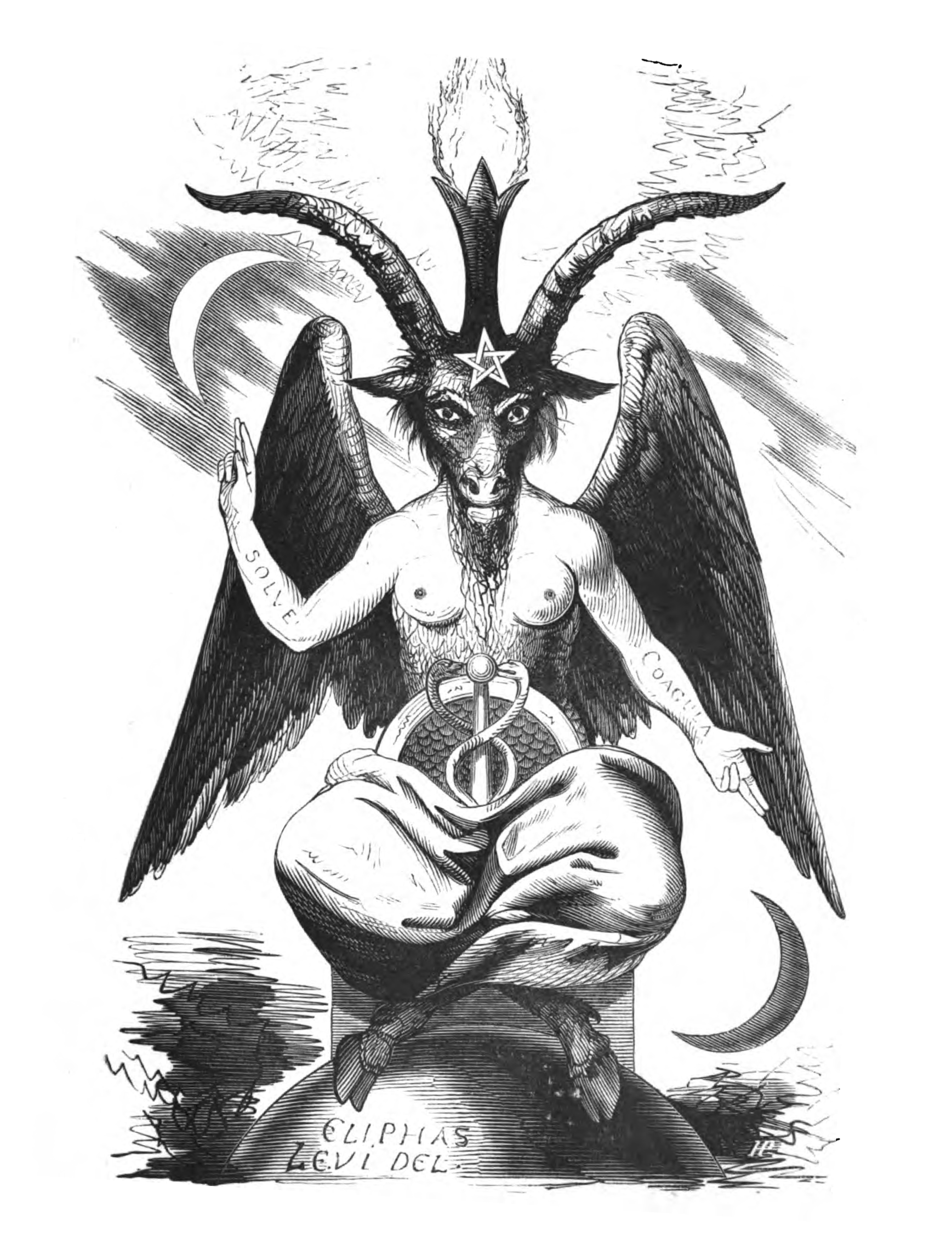
"HE LOVES YOU" is written beside an inverted pentagram with a goat's head inside that some read as the symbol of the Devil, or possibly the symbol of Baphomet. Hell or no, everybody knows that the Devil throws the better party and is most interested in our pursuit of pleasure and happiness - now that's love. Though the two characters are not equivalent, the phrase echoes the "Jesus Loves You" slogan so prevalent in Christianity. Recent photos however indicate that perhaps Jesus definitely does NOT love you. 

"WHO ARE YOU? WHO AM I?" is as existential as it comes and raises the question of identity - something we often take for granted. Recent news reports indicate that the human body, the personal "I" we think of ourselves as being, an integral, single, human unit is actually a teeming community of microbes and plenty of DNA that isn't even human. 

"LiFE'S A RIDE SO ENJOY" could be the Devil's advice, but it also seems like wise advice to celebrate life while you have it - before your ride is over (and who knows when that will be?).

Saturday, September 28, 2013

borf?


Just a short entry today....

I took this picture several years ago on the walkway beneath the Lee Bridge. It's grey color gave it a subliminal feel, not immediately noticeable. Most significant however is the message in the cryptic statement - took me a lap around Belle Isle to figure it out (a bit slow).

Good advice, no?

Originally I thought "borf" was just the name of the tagger, but then Wikipedia expanded my understanding (oh, heresy!).


Tuesday, July 23, 2013

Graffiti Posters & Re-purposing Junk Mail

I may be expanding the definition of "graffiti" a bit when I include creative, non-commercial posters pasted up, not unlike what Shepard Fairey does with some of his potent designs.

Earlier this summer of 2013 I saw a set of traditionally printed posters with intriguing images pasted on the Northbank Park stairway:


I couldn't find much about the phrases on the poster "undisturbed conscience" and "the revolution has begun" but a Google search of "undisturbed conscience" brought up a flag-like image with the strange sigil in the upper left and the text of the First Amendment written on the white stripes...a tea party group? The sigil looks slightly fascistic to me, but I could be wrong.

The homemade poster below is cut from junk mail advertising and then decorated with paint and marker, perhaps a parody of consumer culture or a spoof on the fact that we all subsidize the junk mail we despise.


And there were other faces and posters pasted on the stairs...

Though I still don't know the origin of the "Undisturbed Conscience" posters, the corner of one that was ripped down wins my heart with it's image of Edgar Allan Poe with a halo...


Tuesday, August 23, 2011

Always a relevant reminder...


A good friend of mine contributed this image from a design he saw on a rock near Belle Isle. At first, it looked to me like a small design, maybe 7" across, but the other day when I was walking on the rocks on the south side of the island, I saw it and it's much bigger, more like three feet across. I think it's still there, so if you like it, go snap a pic.

What a beautiful, personal tribute, however hidden and temporary. Hand painted in six colors, it seems a memorial to "Rest In Peace" for someone named "BO", letters that could also be initials. The eyes of the flying skull look compassionate but the mouth grimly determined. It symbolizes the death of BO but also reminds us of our own death as it evokes the classic image of the flying hourglass, an ever-relevant reminder of the swift passing of time: tempus fugit - time flies. 


The first time I saw the flying hourglass image was on a tombstone somewhere. When I started getting tattoos in my late 20's that was one of the first I wanted. It is a reminder that always inspires to to enjoy today, to revel in the the fellowship of family & friends and bask in the pleasures of the body rather than be distracted by temptations of greed and ego.

In Hollywood Cemetery, there's a great flying hourglass image in the pediment
over the door of the Lewis Ginter Mausoleum.

When we are young, often it seems to D R A G on and onnnn but as we get older, it seems to pass more swiftly. Time as a system of measurement may be fixed, but human experience of time varies widely. This concept is explored in the famous short story "Occurrence at Owl Creek Bridge" by Ambrose Bierce and the story was adapted to film by Robert Enrico and won and award at the 1962 Cannes Film Festival.

So, what's the point? 

Getting focused on getting the most out of life & giving of ourselves while we still can.
Being human. Being loving. Being enthusiastic. Being. Being here, NOW.

It may seem like a grim reminder, but it might rescue us from wasting our lives by living someone else's script and then suddenly waking up at 40 with a mid-life crisis over a misdirected life that we try to solve with a sports car - by then it's too late.


At first, I saw "Live with No Regrets" which can be read as a statement of defiance, but then I noticed the heart suggesting to me that with love, pointless selfishness can be avoided while the body & spirit can be fully and delightfully engaged.  

It can also be deeply wise advice - to live in a way that is honest and full and bold. 
Live so we do not regret missing the many delightful experiences life offers us. 
Live so we do not regret not having done something we wanted.
Live so we do not regret having treated others badly.


Thursday, April 21, 2011

ambiguous relevance & random acts of art

A recent marker graffito on the stairway at Northbank park is not immediately clear, in fact, I don't understand it at all. "Where is your God now that clouds attack?" At first, it seems to make an oblique reference to the recent natural & nuclear disasters in Japan with clouds of radioactive material irradiating the populace....but now I'm not so sure. 

If this is what it means, then why the "God" reference? The Japanese are not especially associated with religion or Western concepts of deity. Is it some kind of Zen koan?


Further downstream, there are the remnants of a wooden platform, incomplete probably because the builders didn't realize they were building next to a dense mat of poison ivy. On the 4x4 posts, some local artists left us the following gifts...


Friday, February 25, 2011

BANKSY: Graffiti & The Academy Awards


The above image is not one I found in Richmond, it is a copy of one the designs by the elusive Banksy, an internationally known graffiti artist.  Just google his name and check the images link. Though this is not one of his stencils, a touch of his influence can be seen in a "tryptich" of images I featured in an earlier blog post.


What is most interesting about Banksy's work is that it is low-tech & low-cost yet has an international reputation. Though this is partly due to the ease of spreading images via the Web, part of his popularity is the resonance his images have with those who see them. 


Clearly these are thoughtful, politically significant designs. And the one below puts the "graffiti wars" in a larger anthropological context...imagine graffiti removal at Lascaux!


Most recently, Banksy has expanded the media of his visual expressions with a 5:15 minute documentary video Exit Through the Gift Shop (below) that has been nominated for the Academy Awards according to the NPR story "Shenanigans Are What He Does: Is Banksy Gunning For An Oscar?"

But what will happen if graffiti goes mainstream?


Wednesday, February 16, 2011

Wall of Shame, Seat of Fame

From time to time, I may post a "wall of shame" to mock the stupid, bigoted, hateful or otherwise mean-spirited graffiti we all see in too many places. 
Such sentiments are not only ignorant and ugly, they give graffiti a bad name. 
And besides, isn't there enough pointless rancor in the world?

 
Hemp Korn sucks dick? 
Probably not, but if so, so what?
(what is "hemp korn" anyway? can I get it at the movies?) 

And poor grammar doesn't make them look any better....it looks bad but it sounds much worse....can't you just hear the "duh" in the phrase "is a ugly bitch?"
In stark contrast to the nasty git-wit graffiti above, behold 
The Seat of Fame constructed by unknown evolved beings...


Just when I thought folks didn't hang out in the woods anymore, I came across a delightful little campfire spot built by unknown friends and freely offered to anyone who encounters it with the simple and reasonable request:

"DON'T FUCK THIS UP"  
"PACK OUT YOUR TRASH"

 
Maybe I'm reading too much into this spot, but when I found it, the economic concept of "the gift economy" came to mind. While this concept seems new since it is often applied to the galaxy of useful freeware programs designed and distributed on the Web, the gift economy is actually an ancient and powerful practice. In spite of the dogma of corporate propaganda, not everyone is motivated by greed - some people share freely. 

This freely offered hospitable circle invites a casual conversation around the fire, sharing a refreshing bowl of friendship and the joy of laughter and storytelling - powerful and ancient human traditions that clearly continue today. What some might see as a vandal's nest may actually be the work of cultural creatives who would rather circle 'round the fire than cruise around the mall


Monday, January 31, 2011

wise ears, more war & an update

Recently seen on the transformer building next to the big Vepco hydro building...


hear dat?


partial city paint-over inside the transformer building 


here the aqua male/Mars symbol includes lines of suggestive movement...


In black, over the mysterious word "WOOK":
"Start anew BOMB EVERYTHING."

While this could refer to the metal group "Bomb Everything" it also reminds me of Joseph Conrad's novella Heart of Darkness, when Marlow finds Kurtz's  proclamation "Exterminate all the brutes!" in his International Society for the Suppression of Savage Customs pamphlet. Marlow's discovery of this phrase is portrayed in Francis Ford Coppola's film adaptation of the novella Apocalypse Now between 5:33-5:50.


And finally....


Above is a brief update on my "belle isle hydro plant" entry that reminded us that we are not special. The respondent insists "But my momma tells me it's true" possibly with sincerity, but more likely in sarcastic agreement. This could be a critique of a self-centered, over-praised generation or it could simply be a statement of absolute truth: we are just one of 7 billion people on a tiny planet,  in a solar system that is a small part of the Milky Way galaxy that is just one of billions of other galaxies.

However that's not to say that human life is not beautiful and worth living...


Sunday, January 16, 2011

delinquent dullards or smart subversives?

One stereotype of the graffiti artist is that of a delinquent dullard, but some designs I've seen recently suggest otherwise. It seems that a bit of critical theory has seeped in to the consciousness of some local painters.


my body knows unheard of songs - Cixous


 Helene Cixous is a feminist scholar and professor at The European Graduate School, most noted for her interdisciplinary, poetic, scholarly writing and her attention to sexuality and the body as a form of writing. In this stenciled quote she seems to revel in her particular embodied delight, thus contradicting the anti-sensuality of American culture.


 Cixous' statement reminds me of Terence McKenna's observation that "there are Niagras of beauty within the body" - a statement that continues to astonish me today. But why does a culture seek to repress and put down the body? George Orwell offers a possible answer in 1984 when describing Julia's understanding of politics: "... sexual privation induced hysteria, which was desirable because it could be transformed into war fever and leader worship."


Graffiti today may or may not identify with Punk music, but the off-kilter "U" in this arrangement of the word PUNK is suggestive of movement, potential toppling - kind of like the Vepco hydro plant here.


Inside, about 12' above the floor, this message suggests some knowledge of Guy Debord's 1967 work Society of the Spectacle. Among the shorter definitions Debord provides for spectacle is: "The spectacle is not a collection of images, but a social relation among people, mediated by images."


But this spectacle doesn't seem especially menacing, certainly not worth destroying, so let me try another of his definitions: "The spectacle presents itself as something enormously positive, indisputable and inaccessible. It says nothing more than 'that which appears is good, that which is good appears.' The attitude which it demands in principle is passive acceptance which in fact it already obtained by its manner of appearing without reply, by its monopoly of appearance."
What is that indisputable good? Consumerism? Corporatism? Militarism?


  The paint on these stencils was so fresh I could smell it and the combination of these images arranged on the back of the Vepco transformer building struck me as a kind of triptych of political relevance.


The "one man army" stares out at us with serious determination while making a clever play on the
US Army recruitment motto "Army of One."
Who is this anti-war soldier?
A revolutionary from the past?
A revolutionary from the future? 


Here, the serious challenge of abandoning militarism is sweetened with a bit of humor about a holiday that involves surrender of pleasurable practices. The humor is effective in disarming the reader while the connection of war and lent suggests a clever subtext acknowledging the blood lust of warfare - a war lust that is often fueled by misinformation.


The most complex stencil of the trio, the Buddha image reaffirms the message of peace and balances the intensity of the young revolutionary's gaze. The Buddha emanates energy and gestures in peace, but not passive acceptance of militarism.


Some may dismiss these rebel painters as merely destructive delinquents, but their anti-war message is in line with the warnings President Eisenhower gave Americans 50 years ago when he left office, to beware of the military-industrial complex and its cancerous impact on Democracy.